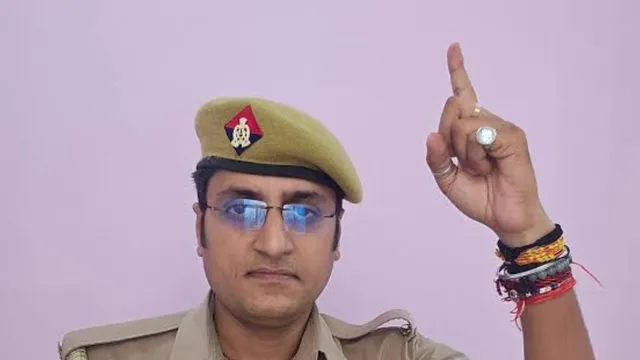
Lucknow: The Uttar Pradesh Police has dismissed constable Sunil Kumar Shukla, who had gained widespread attention after posting a series of viral videos on social media alleging corruption, harassment, and irregularities within the police department.
The dismissal follows a departmental inquiry that examined both the allegations made by the constable and his conduct while serving in the force. Officials stated that Shukla was found guilty of violating departmental discipline, misusing social media platforms, and repeatedly breaching service rules.

Shukla, who was posted at the Lucknow Police Lines, had earlier been suspended after publicly accusing senior officers of corruption and claiming that police personnel were allegedly forced to pay money in exchange for favorable duty assignments. His videos attracted significant public attention and sparked debate about transparency and accountability within the police force.
Departmental Inquiry and Findings
According to information released by the Lucknow Police, a special inquiry committee constituted on May 7, 2026, conducted a detailed investigation into the allegations. The panel reportedly recorded statements from concerned personnel and provided all parties, including Shukla, an opportunity to present evidence and substantiate their claims.
Police authorities stated that during the course of the inquiry, Shukla was unable to provide documentary or material evidence to support the allegations he had made publicly against senior officers and departmental functioning.
The investigation concluded that several accusations circulated through social media platforms were not supported by verifiable proof. Officials further stated that the manner in which the allegations were communicated violated established service protocols and departmental regulations governing public communication by government employees.
Violation of Service Rules Cited
In its official statement, the police department said the dismissal was based not only on the content of the allegations but also on what it described as repeated violations of disciplinary norms.
The inquiry reportedly found that Shukla had used social media and media platforms without authorization, employed language deemed inappropriate toward senior officers, and acted in a manner that allegedly undermined discipline within the police force.
Authorities said his actions were in violation of the Uttar Pradesh Social Media Policy 2023, provisions of the Government Servants’ Conduct Rules, and regulations governing the conduct of uniformed personnel.
Officials argued that members of disciplined services are expected to follow established channels for reporting grievances and allegations rather than airing them publicly without supporting evidence.
Allegations That Triggered the Controversy
The controversy began when Shukla uploaded a series of videos alleging corruption in duty allocation practices. He claimed that police personnel were being asked to pay money for certain assignments and suggested that an organized chain of collection existed within the system.
Some of his videos contained strong criticism of senior officials and quickly spread across social media platforms, generating public discussion and media attention.
Following the circulation of the videos, police authorities initiated a preliminary review and ordered a formal investigation. As part of that process, several personnel connected with the office responsible for duty management were reportedly transferred or removed to ensure an impartial inquiry.

The case drew attention because it touched upon broader concerns regarding internal accountability mechanisms within police organizations and the role of whistleblowers in public institutions.
Debate Over Transparency and Discipline
The dismissal has reignited debate over the balance between institutional discipline and the right of public servants to raise concerns about alleged wrongdoing.
Supporters of the police department argue that disciplined forces rely on established chains of command and internal grievance mechanisms. They contend that making serious allegations publicly without evidence can damage institutional credibility and public confidence.
Others, however, argue that allegations of corruption should always be thoroughly examined, regardless of how they are raised, and that public institutions must ensure employees feel safe reporting concerns through official channels.
While the departmental inquiry concluded that the allegations were not supported by evidence, the case has once again highlighted the challenges faced by large public organizations in maintaining both accountability and discipline.
Police Reiterate Commitment to Accountability
Senior police officials have maintained that the action against Shukla was taken following due process and only after a detailed inquiry. They emphasized that every individual involved was given an opportunity to present evidence and defend their position before a final decision was reached.
The department has also reiterated its commitment to investigating any credible complaints of corruption or misconduct while ensuring adherence to service rules and professional standards.
A High-Profile Case in the Digital Age
The Sunil Kumar Shukla case illustrates how social media continues to reshape interactions between public institutions and their employees. Platforms that enable individuals to instantly reach large audiences can amplify allegations and grievances far beyond traditional internal channels.
At the same time, the incident underscores the growing challenges government departments face in balancing transparency, freedom of expression, and organizational discipline in an increasingly connected digital environment.
With the dismissal now formalized, the case may continue to generate discussion about whistleblower protections, internal accountability systems, and the responsibilities of public servants in the age of social media.
For the Uttar Pradesh Police, the matter represents both a disciplinary case and a broader reminder of the importance of maintaining public trust through transparency, professional conduct, and effective grievance-redressal mechanisms.